

Written Article
First Place (18-24 Years Old)
#NYRE2025
Setia Alam’s Struggle Between Green Oasis and Urban Pressure
As the morning sun sparkles on Setia Alam’s Central Lake, joggers, families, and wildlife create a vibrant scene. However, beneath this tranquility lies a crucial concern. A recent survey of 29 residents reveals that this cherished oasis is at a critical crossroads, balancing its role as a community sanctuary with the pressures of modern urbanization.
A Community Invested in Its Environment
The data, gathered through an original survey of 29 residents conducted by the author on September 11, 2025, paints a picture of a community with deep roots and a strong connection to its natural spaces. A significant majority of respondents (58.6%) have called Setia Alam home for more than a decade, indicating a long-term stake in the health of their neighborhood. This connection is active: 82.8% of residents visit the local lakes at least occasionally, with nearly half (44.8%) visiting frequently.
The primary reasons for visiting are clear: 37.9% go for exercise, such as walking and cycling, while a large majority come for simple relaxation and enjoyment of the scenery (69%). For them, the lakes are not just decorative; they are vital community infrastructure for mental and physical well-being. As one resident put it, it’s a “Great place.”
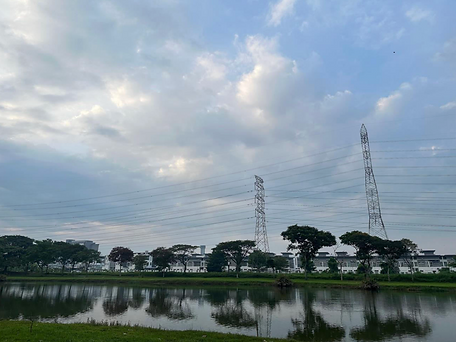
(Fig. 1: Setia Alam's lakes provide vital scenery and relaxation for residents, who fight to preserve this natural beauty. Photo of a lake near Persiaran Setia Prima. (Nurul A’isya, 2025).
Wildlife and Worry: A Paradox of Plenty
The lakes serve as vital ecosystems, not just for humans. Residents report a diverse wildlife, with 72.4% spotting monitor lizards and 69% seeing various birds. Fish and tortoises account for 24.1% of sightings, indicating a healthy ecosystem. Think of the lake as a busy underwater city and a natural air conditioner for ours—protecting it isn't just about scenery, it's about safeguarding our local food chain and fighting climate change, one cool breeze at a time.
Yet, this apparent abundance exists alongside significant and visibly concerning pollution. When asked to describe specific instances, residents provided stark evidence. Many reported that the water is "Dirty water, too dirty to the fact that it can make someone feel like bugs are crawling up their skin," pointing to a level of contamination that affects perceived well-being. The source of this pollution was often attributed to development, with one resident noting, "Dirts - probably from the nearby housing development," while others observed, "Maybe the murky water and water waste being directed to the lake."
The most commonly reported issue was the presence of litter. Multiple respondents reported seeing "a pileup of plastic bottles and cigarette butts lying around either by or within the water itself" and "litter, including plastic bottles and bags, floating in the lake and accumulating along the shoreline." This visual eyesore, including simply the "murky color" of the water, directly contradicts the community's desire for scenic relaxation and a fundamental truth voiced by UNICEF Goodwill Ambassador Audrey Hepburn: “Water is life, and clean water means health” (Audrey Hepburn Quotes, n.d.) The current state of the lake challenges this vital connection between a clean environment and community well-being.
It is no surprise, then, that when asked to rate the overall environmental health of the lakes on a scale of 1 to 5, not a single respondent gave a perfect score of ‘5’. While 17.2% rated it ‘4’, the largest group—44.8%—gave an average rating of ‘3’. A further 27.6% rated it a poor ‘1’ or ‘2’, revealing a community that sees clear room for improvement despite valuing what exists.

(Fig. 2: The serene image of the lake is tainted by accumulated litter and murky waters, a key concern for the community. Photo of a lake near Persiaran Setia Prima. (Nurul A’isya, 2025).
Identifying the Enemy: Pollution vs. Development
The survey uncovered a near-even split on the biggest perceived threat, highlighting a complex environmental challenge. On one hand, 41.4% of residents identified litter and plastic waste as the primary threat, a visible blight confirmed by their own testimony.
Conversely, 37.9% consider over-development around the lakes to be the most significant threat—a more subtle risk posed by construction runoff, habitat disruption, and growing urban pressure. This tension is clear in residents’ calls to “Control rapid development” and start “Avoiding development near the lake.” A small but significant portion (13.8%) pointed to a lack of biodiversity, suggesting a desire for even richer and more resilient natural habitats.
A Path Forward: The Community’s Prescription for Partnership
The survey went beyond diagnosing problems to proposing solutions. When asked for the most important action for improvement, residents’ answers coalesced around a powerful theme: the need for a collaborative partnership between the community and management.
The most frequent suggestions called for practical, hands-on action. Residents overwhelmingly demanded “Regular lake clean-up initiatives,” “stricter enforcement against littering,” and to “fine people who litter the lakes.” Many emphasized consistent upkeep, suggesting management should “clean it every week,” perform “monthly maintenance,” and “hire a professional to clean the lake water.”
Beyond enforcement, the desire for shared responsibility was palpable. The concept of “gotong-royong” (communal work) was frequently mentioned. One resident envisioned that “frequent communal gatherings (for rubbish cleanup/maintenance) could foster an active community with many benefits given (Outdoors, Responsibility, Area Sanctity).”
This aligns with the most holistic solution offered: “enhancing community engagement and collaborative management between residents and management, and focusing on sustainable, nature-based conservation efforts rather than large-scale construction.” This sentiment echoes the community’s clear desire to be active stewards, not passive observers. A forward-thinking suggestion even proposed to “Consider involving local schools in conservation efforts to foster environmental stewardship among younger generations.”
Conclusion: A Call for Shared Stewardship and Local Action in Setia Alam
The message from Setia Alam's residents is clear and unanimous. Their lakes are a beloved asset, but their health is fragile, caught between the pressures of development and the visible blight of pollution. The path to preservation requires a robust partnership where both the Setia Alam MBSA branch and the community fulfill their roles. As the local governing body, the Setia Alam MBSA branch must be held to its mandate of environmental protection by implementing a schedule of consistent, professional lake maintenance and stricter, visible enforcement against littering and construction runoff.
Residents are not powerless. To catalyze this action, the community must actively use the channels available to them. They can formally petition the Setia Alam MBSA branch and participate in its public consultations to demand greater accountability for the lakes' upkeep. Persistent official complaints should be filed with the branch to document inconsistencies, while social media can be used to spotlight issues, creating public pressure for action. Engaging their political representative (MP) can help escalate these local concerns. Alongside these formal avenues, residents can embody the spirit of direct ownership by organizing regular “gotong-royong” sessions to maintain the lakeshores.
This civic partnership must also nurture future stewards. Students in Setia Alam can lead and participate in educational programs championed by the MBSA branch, such as school-led "Lake Guardian" clubs or conservation workshops, fostering lifelong environmental responsibility. By uniting consistent, localized municipal action with vigorous community initiative—from formal petitions to student-led projects—Setia Alam can secure the future of its natural heart. The path forward requires everyone to play their part.

( Fig. 3: Existing rules are in place, but residents call for stricter enforcement and personal responsibility to ensure they are followed. Photo of a lake near Persiaran Setia Prima. (Nurul A’isya, 2025).
References
-
Audrey Hepburn Quotes. (n.d.). BrainyQuote.com. Retrieved September 22, 2025, from https://www.brainyquote.com/quotes/audrey_hepburn_700248
-
Shah Alam City Council (MBSA). (n.d.). Municipal functions and responsibilities in Setia Alam [Internal documentation]. Retrieved from provided project files on MBSA jurisdiction.
Nurul A’isya Binti Mohd Jaferi Hanafi
UiTM Kampus Cawangan Rembau